Home›Blog›How to Choose a Gas Safe Boiler Installer in South London
Boiler Guides
How to Choose a Gas Safe Boiler Installer in South London
Reion Miller5 November 2026
To choose a Gas Safe boiler installer, check their registration on the Gas Safe Register, confirm they are qualified for your type of boiler, compare written quotations, and make sure you receive the warranty and Building Regulations paperwork.
Choosing a new boiler is a significant investment, but selecting the right installer is just as important as choosing the appliance itself. A poorly planned installation can lead to unnecessary costs, heating problems and potential safety risks, even when the boiler itself is from a reputable manufacturer.
Whether you are replacing an ageing boiler, upgrading your central heating system or installing a new appliance in a recently renovated property, it is important to find an installer with the correct qualifications, experience and registration.
If you are looking for a Gas Safe boiler installer in South London, there are several things to check before accepting a quotation. These include verifying the engineer's registration, understanding what the installation quote covers, checking warranty arrangements, and making sure you receive the correct paperwork.
This guide explains how to choose a qualified boiler installer, what to ask before booking and how to avoid common mistakes when arranging a new boiler installation.
1. Check That the Boiler Installer Is Gas Safe Registered
The first and most important step is checking that the engineer carrying out your gas boiler installation is Gas Safe registered.
In Great Britain, anyone carrying out gas work as part of their business must be registered with Gas Safe Register and competent to undertake the specific work involved.
Gas Safe registration is not simply a general plumbing qualification. It confirms that an engineer is registered to undertake particular types of gas work within their approved scope.
Before agreeing to an installation, ask for the engineer's Gas Safe registration details. You can verify an engineer through the official Gas Safe Register website.
You should check:
The engineer's full name.
Their Gas Safe licence number.
The registration expiry date.
The business they are registered under.
Whether their qualifications cover domestic gas boilers.
Whether they are qualified for the specific appliance and work required.
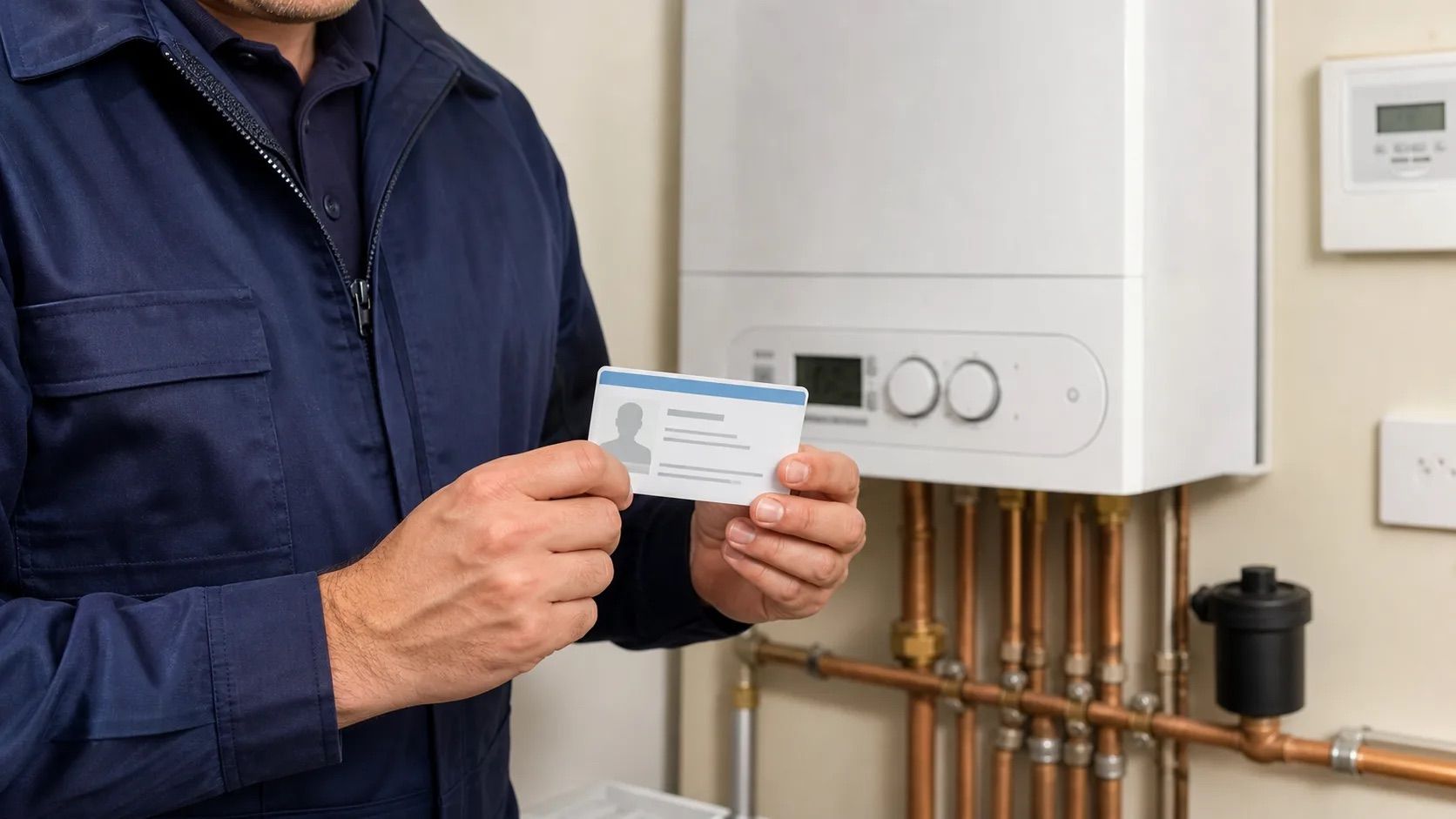
How to check a Gas Safe ID card
Every registered gas engineer carries a Gas Safe ID card. It provides important information about their identity and qualifications.
The front of the card normally displays:
A photograph of the engineer.
Their name.
Personal licence number.
Registration expiry date.
Gas Safe registration information.
The reverse of the card shows the categories of gas work the engineer is qualified to undertake.
For a domestic gas boiler installation, check that the engineer has the relevant domestic boiler installation qualifications.
Do not assume that someone is qualified for boiler installation simply because they describe themselves as a gas engineer or heating specialist.
You should also check that the person who actually attends your property is the registered engineer you have verified.
2. Check the Engineer's Boiler Installation Experience
Gas Safe registration is essential, but it also helps to consider the engineer's practical experience.
A boiler replacement can involve much more than removing an old appliance and connecting a new one. The existing heating system, pipework, flue position, hot water requirements and property layout can all influence the installation.
Before choosing an installer, ask about their experience with:
Combi, system and heat-only boilers.
Like-for-like boiler replacements.
Changes from one boiler type to another.
Boiler relocation.
Existing heating system upgrades.
Flue and condensate arrangements.
Boiler commissioning and manufacturer registration.
If you are still deciding between appliance types, our combi vs system boiler comparison guide explains the practical differences before you speak to an installer.
It is also useful to ask which boiler manufacturers they regularly install. For example, an installer working with Worcester Bosch, Vaillant, Ideal and Baxi may be familiar with different appliance designs and installation requirements.
However, the number of brands an installer advertises should not be the deciding factor. What matters is whether they can assess your property properly and recommend an appropriate system.
3. Make Sure the Installer Assesses Your Property Before Quoting
Be cautious about accepting a final boiler installation quotation based only on a short telephone conversation or a few photographs.
A suitable assessment helps the installer understand your existing heating system and determine what work will be required.
Depending on the installation, the assessment may consider:
The existing boiler and heating system.
The number of radiators.
The number of bathrooms.
Your household's hot water requirements.
Available space for the new boiler.
Existing gas and water pipework.
Flue position and discharge arrangements.
Condensate drainage.
Heating controls and thermostats.
The condition of the existing heating system.
For example, a small flat with one bathroom may have different hot water requirements from a larger South London family home with several bathrooms.
An installer should not recommend a boiler simply because it is the most powerful model or the cheapest option available.
The recommendation should be based on the property's heating requirements and the manufacturer's installation guidance.
4. Compare Written Boiler Installation Quotes
Getting more than one quotation is a sensible way to understand the available options and compare installation costs.
However, comparing only the final price can be misleading.
Two installers might recommend similar boilers but include different equipment, labour and additional work in their quotations.
Ask each installer to explain exactly what is included. A good written boiler installation quotation should identify:
Boiler manufacturer and model.
Boiler type and output.
Supply and installation costs.
Removal and disposal of the existing boiler.
Flue and associated installation work.
Necessary pipework alterations.
Heating system cleaning or water treatment requirements.
Magnetic filter provision, where appropriate.
Heating controls and thermostat arrangements.
Commissioning and testing.
Manufacturer warranty details.
Relevant certificates and registration.
Any exclusions or additional charges.
You should also check whether VAT is included and how long the quotation remains valid.
Citizens Advice recommends obtaining written quotations and comparing the work and costs before choosing a contractor.
Why the cheapest boiler installation quote is not always the best
A significantly cheaper quotation may appear attractive, but it is important to understand why the price is lower. It might exclude items that another installer has included, such as:
Additional pipework.
Heating system cleaning.
A magnetic filter.
New heating controls.
Flue alterations.
Removal of the old appliance.
Additional labour.
This does not automatically mean a cheaper installer is unsuitable. It means you should compare the actual scope of work rather than assuming every quotation covers the same installation.
Ask the installer to explain any significant differences before making your decision.
5. Understand What Happens During a Boiler Installation
A professional boiler installation should follow an organised process, from the initial assessment through to commissioning and handover. Although the exact work varies between properties, a typical installation involves several stages.
Initial assessment and boiler recommendation
The engineer assesses the existing heating system, considers your household's requirements and recommends a suitable replacement.
Boiler selection and quotation
You receive details of the recommended boiler, installation work, warranty and total price. Any additional work should be explained before you agree to proceed.
Removal of the old boiler
The existing appliance is disconnected and removed in accordance with the relevant safety requirements.
Installation of the new boiler
The new appliance is fitted, connected and installed according to the manufacturer's instructions and applicable regulations. Any necessary changes to pipework, flue arrangements or associated components are completed as part of the agreed installation.
Commissioning and testing
The engineer completes the required commissioning procedure and checks that the appliance operates correctly. The installation should be recorded using the relevant commissioning documentation.
Final handover
The installer explains the controls, provides the manufacturer's instructions and gives you the relevant installation records and warranty information.
Understanding these stages makes it easier to assess whether an installer has provided a complete service rather than simply fitting the appliance.
6. Check the Boiler Warranty and Registration Arrangements
A new boiler normally comes with a manufacturer's warranty, but the length and conditions vary by manufacturer and model.
Some warranties require the boiler to be installed by an appropriately qualified engineer, registered with the manufacturer within a specified period and serviced regularly.
Before accepting a quotation, ask:
How long is the manufacturer's warranty?
Is the installer authorised or approved by the manufacturer for any extended warranty being offered?
Who registers the boiler?
When will the registration be completed?
What maintenance is required to keep the warranty valid?
Are labour and replacement parts covered?
Are there any exclusions?
Do not rely solely on a verbal statement that your boiler comes with a long warranty. Ask for the specific warranty terms relating to the model being installed.
You should also retain the warranty confirmation and installation paperwork for future reference.
7. Make Sure You Receive the Correct Installation Certificates
Boiler installation involves more than fitting the appliance and checking that the heating works. The completed installation must also meet the relevant safety and Building Regulations requirements.
In England, registered installers can use an appropriate competent person scheme to self-certify certain work instead of requiring the homeowner to arrange a separate Building Regulations inspection.
For a qualifying gas boiler installation, the installer should arrange the relevant notification and provide the Building Regulations Compliance Certificate. GOV.UK explains how competent person schemes work.
You should ask your installer what documentation you will receive. Depending on the installation, this may include:
Building Regulations Compliance Certificate.
Completed boiler commissioning checklist.
Manufacturer warranty confirmation.
Boiler instruction manual.
Installation and handover records.
Keep these documents somewhere accessible. They may be useful when arranging future servicing, dealing with warranty queries or selling your property.
8. Check Reviews, Insurance and Business Details
Customer reviews can help you understand how an installer communicates, handles appointments and deals with problems after completing a job. Look beyond the overall star rating and read individual reviews.
Useful things to look for include:
Whether appointments are kept.
Whether quotations are explained clearly.
Whether customers report unexpected charges.
Whether installation work is completed as agreed.
Whether the property is left tidy.
Whether the installer responds to follow-up questions.
Whether customers mention receiving the relevant paperwork.
You should also ask whether the business holds suitable public liability insurance. If the company employs staff, ask about appropriate employer's liability insurance as well.
Check that the business name and contact details on your quotation match the business you are dealing with.
A professional installer should be comfortable answering reasonable questions about their qualifications, insurance and installation process.
9. Watch Out for These Boiler Installer Warning Signs
Choosing an unsuitable installer can create unnecessary costs and safety concerns. Be cautious if someone:
Cannot provide evidence of current Gas Safe registration.
Refuses to show their Gas Safe ID card.
Is not qualified for the specific boiler work.
Offers to have someone else sign off gas work they performed without registration.
Recommends a boiler without assessing your requirements.
Provides a vague quotation without explaining what is included.
Cannot explain the warranty arrangements.
Refuses to provide installation documentation.
Pressures you to accept a quotation immediately.
Demands unexplained payments before agreeing on the scope of work.
Makes unrealistic promises about energy savings.
Cannot explain who will actually carry out the installation.
A low price or an attractive advertisement should never replace proper checks. If something does not feel right, take time to compare another quotation.
10. Questions to Ask Before Hiring a Boiler Installer
Before agreeing to a new boiler installation, use the following questions to assess whether the installer is suitable for your property.
Question
Why it matters
Are you Gas Safe registered?
Confirms the required registration
Can I see your Gas Safe ID card?
Allows you to check the engineer's identity and qualifications
Are you qualified for my type of boiler?
Confirms the relevant work category
Will you assess my existing heating system?
Helps ensure the recommendation suits your property
Which boiler model do you recommend and why?
Explains the basis of the recommendation
What exactly is included in the quotation?
Avoids misunderstandings about the work
Are removal and disposal included?
Clarifies what happens to the old appliance
Is system cleaning or a magnetic filter required?
Clarifies the proposed system preparation
How long will the installation take?
Helps you plan around the work
Who registers the manufacturer's warranty?
Clarifies responsibility for warranty activation
Will I receive the relevant certificates?
Confirms the installation paperwork
What happens if an issue develops after installation?
Clarifies aftercare and warranty support
You do not need to ask every question word for word. The aim is to understand the installation before committing to the work.
Why Choose R.W. Miller for Boiler Installation in South London?
R.W. Miller Plumbing & Heating provides boiler installation across South London and Surrey, including boiler installation in Wandsworth.
Reion Miller is a Gas Safe registered engineer (registration number 919881), providing boiler installation and heating services for domestic properties.
The service covers:
Combi boiler installation.
System boiler installation.
Heat-only boiler installation.
Replacement of existing boilers.
Installation assessments and recommendations.
Boiler commissioning and handover.
R.W. Miller works with established manufacturers including Worcester Bosch, Vaillant and Ideal.
Every installation is assessed before a fixed quotation is provided, so you understand the agreed work and price before installation begins.
You can find further details about available boiler options, the installation process and service coverage on our Boiler Installation South London page.
If you are considering replacing your existing appliance, read our guide to how much a new boiler costs in 2026 to understand the factors that influence installation prices.
Need a new boiler in South London? Call R.W. Miller on 07375 813996 or [arrange an installation quotation](/get-a-quote/) to discuss your requirements.
Frequently asked questions
How do I find a reliable Gas Safe boiler installer in South London?
Start by checking the engineer's registration on the official Gas Safe Register website. Confirm that their qualifications cover domestic boiler installation, ask about their experience, compare written quotations and check customer reviews. Make sure you understand the installation scope and paperwork before agreeing to the work.
How can I check whether a boiler installer is Gas Safe registered?
Ask to see the engineer's Gas Safe ID card and check their details using the official Gas Safe Register website. The card shows their identity, registration information and categories of work they are qualified to undertake. You can also use the register's engineer search facility to verify their details.
Can any Gas Safe engineer install a boiler?
Not necessarily. Gas Safe registration does not mean every engineer is qualified for every type of gas work. Check the categories on the engineer's ID card to confirm that they are qualified for the specific boiler installation required.
Should I get more than one boiler installation quote?
Yes. Comparing written quotations from different installers can help you understand the work involved and identify differences in equipment, labour, materials and warranty arrangements. Compare the full scope rather than choosing solely on the lowest price.
What should a boiler installation quote include?
A quotation should identify the proposed boiler model, supply and installation costs, removal of the old appliance, relevant pipework and flue work, commissioning, warranty arrangements and required paperwork. It should also explain exclusions and any circumstances that could lead to additional charges.
What certificates should I receive after a new boiler installation?
For a qualifying installation in England, you should receive a Building Regulations Compliance Certificate following the relevant notification. Gas Safe Register says it is normally posted within about 28 days of installation. If it has not arrived, ask your installer to confirm that the work has been notified. You should also receive the boiler's commissioning documentation, operating instructions and manufacturer warranty information.
How long does a new boiler installation take?
A straightforward like-for-like replacement may take approximately four to six hours. However, installations involving boiler relocation, changes to the heating system or additional pipework may take longer. Your installer should explain the expected timescale after assessing the property.
Can a plumber install a gas boiler?
A plumber can install a gas boiler only if they are also Gas Safe registered and qualified for the relevant gas work. General plumbing experience alone is not sufficient for gas boiler installation. This includes the relevant gas appliance work and final gas connections.
Reion Akim
Gas Safe 919881
Owner / Certified Gas Safe Engineer
Reion Akim is a Gas Safe-registered plumber and heating engineer with 5+ years of hands-on experience across South London. Founded R.W. Miller Plumbing & Heating to deliver honest, high-quality gas and boiler work without the inflated prices. His ethos is simple — actions speak louder than words.