A power flush is a deep clean of a central heating system that removes sludge, rust and debris to restore circulation.
When the weather gets colder, the last thing you want is a heating system that struggles to keep your home warm.
Are your radiators taking longer to heat up? Do some stay cold while others get hot? Maybe your heating system has started making strange noises.
These could be signs of sludge or other problems in your central heating system. This is when a power flush may be worth considering.
But what exactly does a power flush do? And how do you know if your heating system really needs one?
What is a power flush?
A power flush is a deep clean of your central heating system.
Over time, radiators and pipework can collect sludge, rust and other debris. This can restrict the flow of hot water around the system and reduce how well your heating works.
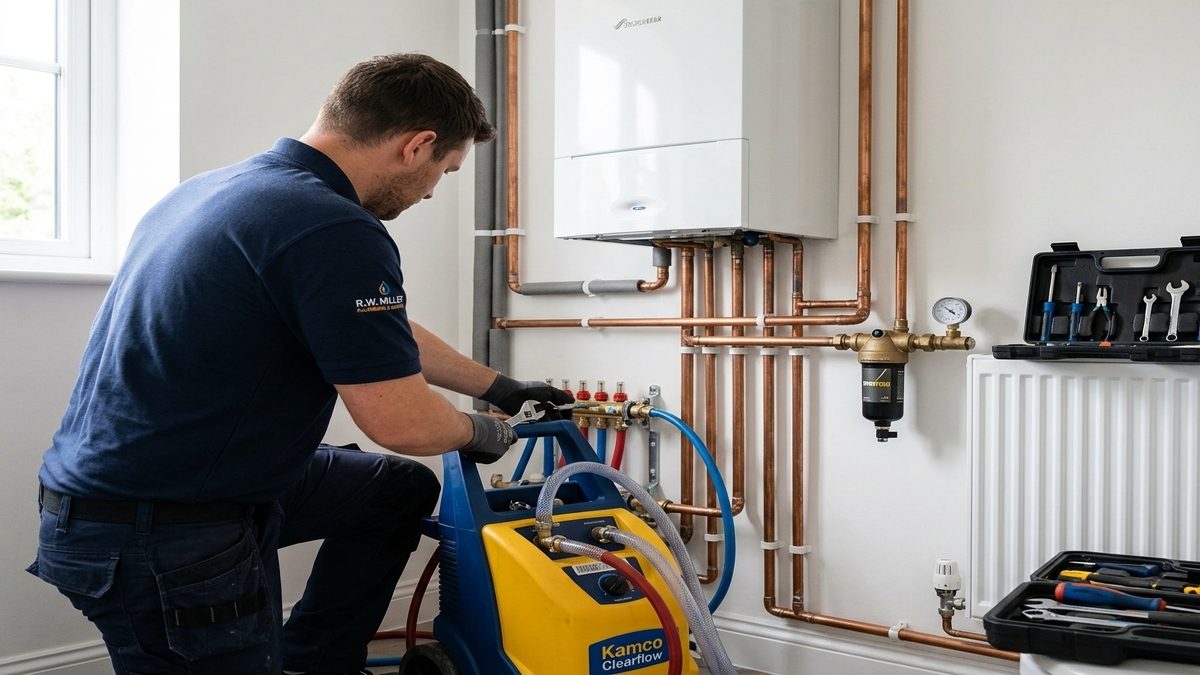
During a power flush, a heating engineer uses a specialist high-flow pump and cleaning chemicals to move water through the system. This helps loosen and remove built-up sludge and debris. The system is then cleaned and refilled.
A power flush is different from simply draining and refilling the heating system. It is designed for systems where a deeper clean is needed.
How do you know if your heating system needs a power flush?
Not every heating problem means you need a power flush.
However, there are some common signs that your system may have a build-up of sludge.
These include:
- Radiators that are cold at the bottom but hot at the top
- Some radiators staying colder than others
- Heating taking longer than it used to
- Noisy pipes or radiators
- Poor circulation around the heating system
- Dark or dirty water when a radiator is drained
- A boiler that appears to be working but struggles to heat the home
Cold spots at the bottom of radiators are particularly common with sludge build-up. However, similar symptoms can also be caused by trapped air, poor balancing, a pump problem or other issues. Noises from your pipes or radiators can have other causes too, so read our guide on
That is why it is important to identify the cause before paying for a power flush.
What happens during a power flush?
The exact process depends on the condition and design of your heating system.
An engineer will normally assess the system first. If a power flush is suitable, specialist equipment is connected to the central heating system.
Cleaning chemicals may be used to help break down deposits. The engineer then flushes the system to remove dirty water, sludge and debris.
Once the system is clean, it is rinsed and refilled. A suitable inhibitor can also be added to help reduce future corrosion and sludge build-up.
The job can take several hours and, depending on the size and condition of the system, may take most of a day.
Do you need a power flush before winter?
If your heating has been working normally, you may not need one.
But if you noticed problems during the last winter, autumn is a sensible time to have your system checked.
Getting the issue investigated before the weather becomes colder can give you time to decide whether the system needs cleaning, repairing or another type of maintenance.
A power flush may be useful where sludge is affecting circulation. It is not a fix for every heating problem. For example, a faulty pump, broken valve or other component may need repairing instead.
Is a power flush always the best option?
No.
A professional should assess the condition of your heating system before recommending a power flush. Some systems may only need a simpler flush or another repair.
Very old systems can also have underlying weaknesses. A high-flow flush can put additional pressure on weak components, so the condition of the system should be considered first.
At R.W. Miller, I diagnose the problem before carrying out central heating work. My service covers repairs, maintenance and power flushing across South London and Surrey.
Get your central heating ready for winter
If your radiators are cold at the bottom, your heating is slow to warm up, or your system has become noisy, it is worth getting it checked before winter.
You may need a power flush, but you may need something else. The important thing is to find the cause first.
R.W. Miller provides central heating repair, maintenance and power flushing across South London and Surrey. Contact us to arrange an assessment and find out what your system needs.
Key takeaway
A power flush is a specialist deep clean for a central heating system affected by sludge, rust and debris.
It can help improve circulation and heating performance, but not every heating problem needs a power flush. A qualified heating engineer should assess the system first.