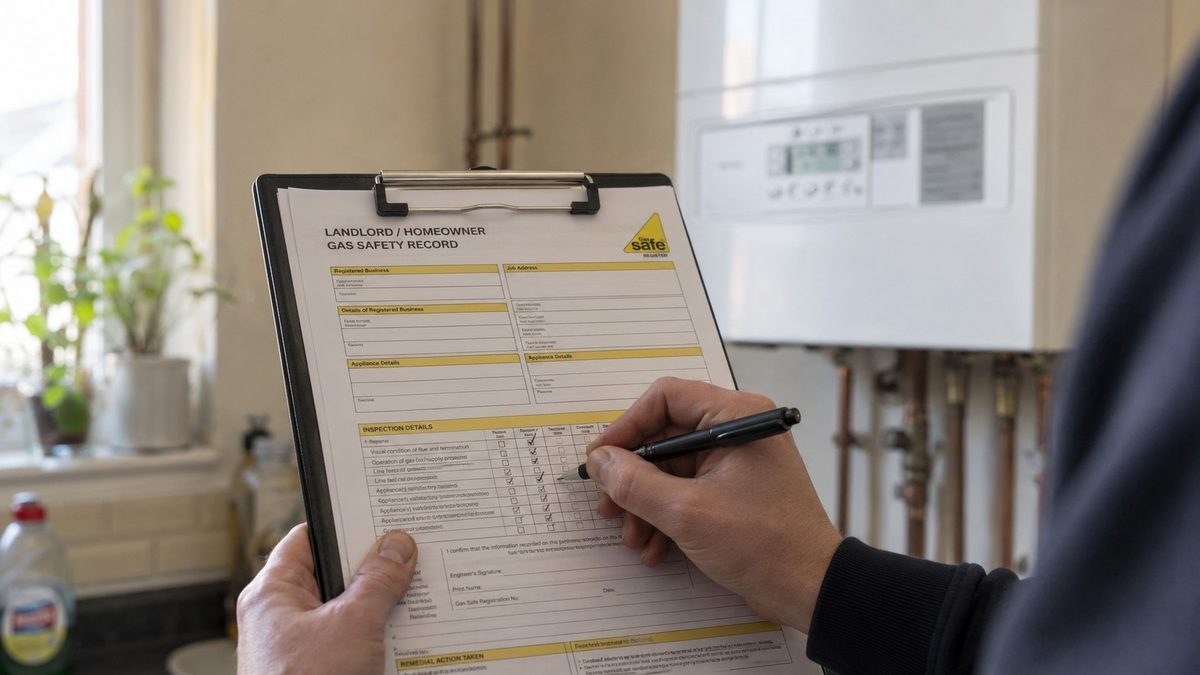
If you've ever been handed a gas safety certificate, you'll know it's not exactly light reading — a dense grid of tables, Pass/Fail boxes, and codes like "NCS" and "AR" that nobody explains. As a Gas Safe registered engineer, I fill these out most weeks, so here's what every section of the document actually means.
What Is This Document Actually Called?
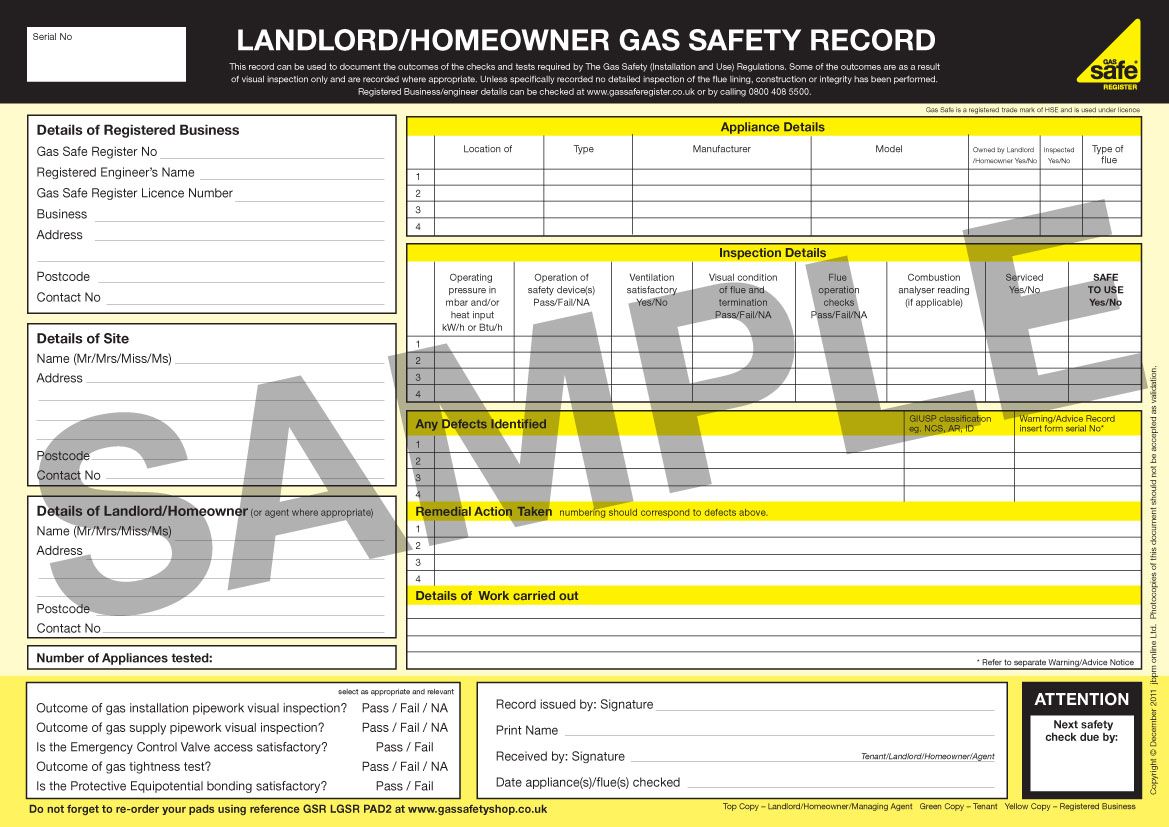
The certificate is officially titled the Landlord/Homeowner Gas Safety Record. Almost everyone still calls it a CP12 — short for "CORGI Proforma 12," a name left over from CORGI, the industry body that regulated gas engineers before the Gas Safe Register took over in 2009. You'll also hear it called a gas safety certificate. All three names refer to the same document.
Note the "Homeowner" half of the title — you don't have to be a landlord to have one issued. Anyone who wants written proof their gas appliances have been checked, for a mortgage, insurance, or peace of mind, can request one. If you're a landlord and want to know when you're legally required to hold one and how often it must be renewed, see our guide to gas safety certificates for landlords.
Details of Registered Business
At the top of the form, the engineer records their Gas Safe registration number, name, and business details. This is the one section worth actually checking — it's your proof that whoever inspected the property was legally qualified to do so. You can verify any registration number for free on the Gas Safe Register before treating the certificate as valid.
Appliance Details
This table lists every gas appliance in the property — boiler, gas fire, gas cooker, and so on — along with its location, make, model, and flue type. Each appliance also gets marked as owned by the landlord or the tenant/homeowner, which matters because a landlord's legal obligation only covers appliances they own, not ones a tenant has brought in themselves.
Inspection Details — What Each Column Means
This is the busiest table on the form, and the one most people skim past. Each column records a specific check:
| Column | What it means |
|---|---|
| Operating pressure | The gas pressure at the appliance, measured in mbar — confirms it’s running within the manufacturer’s safe range |
| Operation of safety device(s) | Whether devices that shut the appliance down in a fault condition are working |
| Ventilation satisfactory | Whether the room has enough airflow for the appliance to burn gas safely |
| Visual condition of flue and termination | Whether the flue (the pipe that vents exhaust gases outside) is intact and correctly positioned |
| Flue operation checks | Whether the flue is actually clearing combustion gases as it should |
| Combustion analyser reading | A gas analyser reading confirming the appliance is burning cleanly, not producing dangerous carbon monoxide |
| Safe to use | The overall verdict — Yes or No |
If "Safe to Use" is marked No, the appliance should have been turned off or disconnected on the spot. That's not a formality — it means the engineer judged it dangerous to leave running.
Any Defects Identified — and What Those Codes Mean
If something’s wrong, it’s logged here with a classification code from the Gas Industry Unsafe Situations Procedure (GIUSP). Since a 2015 update to that procedure, these codes work slightly differently than a lot of people assume:
- ID — Immediately Dangerous. The appliance poses an immediate risk and must be turned off and labelled "Do Not Use" on the spot.
- AR — At Risk. Since 2015, At Risk carries the same "DANGER, DO NOT USE" message as Immediately Dangerous — engineers no longer leave an At Risk appliance running. The difference between AR and ID now affects the technical follow-up required, not whether you can keep using the appliance.
- NCS — Not to Current Standards. The least severe classification. It flags an installation that doesn’t meet today’s standards but isn’t treated as unsafe to use — no "Do Not Use" warning applies here.
If you see AR or ID anywhere on your certificate, treat it the same way: the appliance should have been switched off, and it shouldn’t be used again until a Gas Safe engineer has resolved it.
Remedial Action Taken & Details of Work Carried Out
These two sections record what the engineer actually did about any defects — whether that’s a full repair, a temporary fix with follow-up required, or simply disconnecting a dangerous appliance. Read this alongside the defects section above; a defect with no corresponding remedial action is worth querying with whoever issued the certificate.
The Final Checklist and Renewal Date
Near the bottom, a short checklist confirms the wider gas installation was checked — the pipework, the Emergency Control Valve, a gas tightness test, and equipotential bonding (the electrical earthing that protects against faults). In the corner, a boxed "next safety check due" date tells you exactly when the certificate expires. A CP12 is valid for 12 months from the inspection date — for the full legal detail on renewal deadlines and penalties for letting it lapse, see our landlord gas safety certificate guide linked above.
Frequently Asked Questions
Is a CP12 the same as a gas safety certificate?
Yes. CP12, gas safety certificate, and Landlord/Homeowner Gas Safety Record all refer to the same document — CP12 is just the old CORGI reference number that stuck.
Do homeowners need a gas safety certificate?
There’s no legal requirement for homeowners the way there is for landlords, but many choose to get one anyway — for a mortgage application, home insurance, or before selling a property. The form is titled "Landlord/Homeowner" for exactly this reason.
What does it mean if my certificate says "Not to Current Standards" (NCS)?
NCS is the least serious of the three GIUSP classifications. It means an installation doesn’t fully meet today’s standards, but it isn’t treated as unsafe to use — unlike AR or ID, it doesn’t carry a "Do Not Use" warning. It’s still worth having addressed at your next service.
What happens if my certificate shows a defect?
It depends on the code. AR (At Risk) and ID (Immediately Dangerous) both mean the appliance should have been turned off and must not be used again until it’s fixed — since a 2015 rule change, these two codes carry the same "DANGER, DO NOT USE" warning. NCS is less severe and doesn’t carry that warning. Check the Remedial Action Taken section for what was already done.
How do I check my engineer is Gas Safe registered?
Their registration number is printed at the top of the certificate. You can check it’s valid, and see what work they’re qualified to carry out, free on the Gas Safe Register linked above.